
The Rule of Thumb
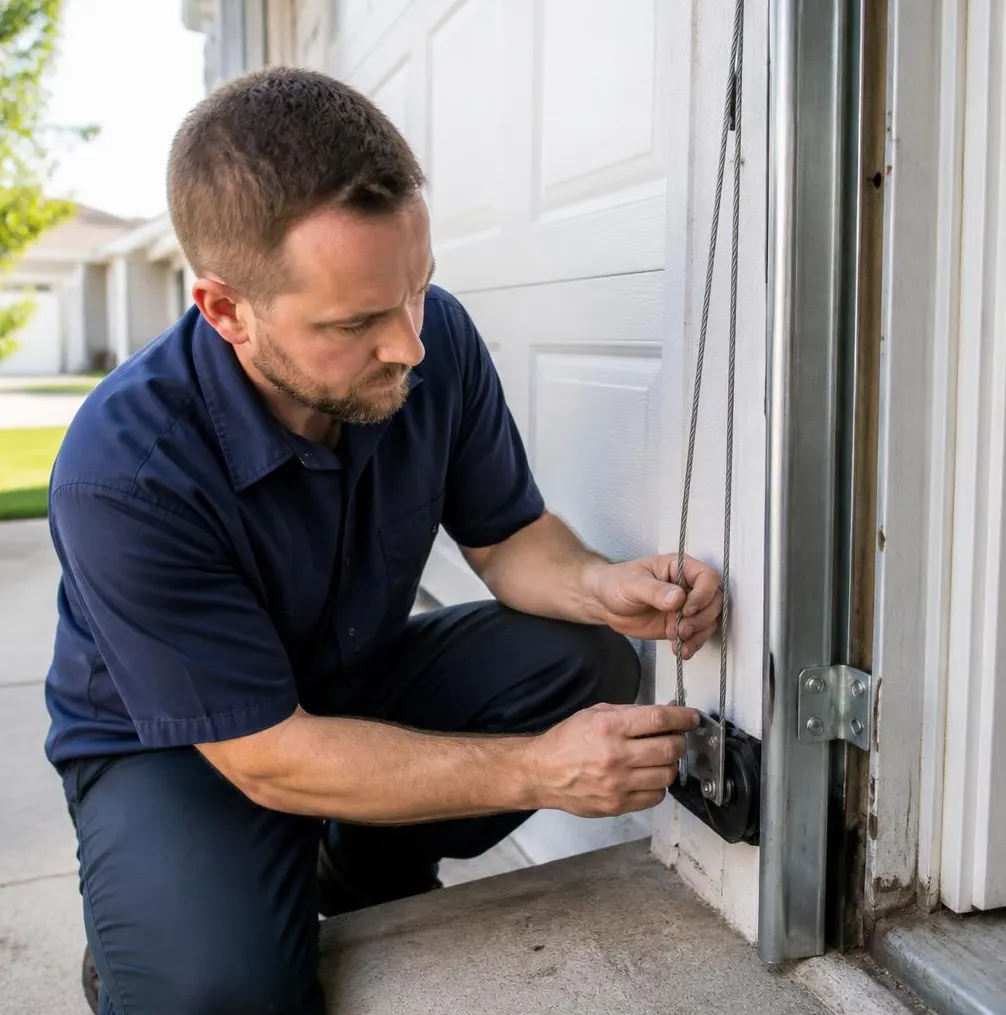
If a part failing could actually hurt someone — fingers caught in a door that won't reverse, a spring letting go under tension, a panel that could fall — retrofit it now. If the issue is just age, noise, or looks, you can usually leave it alone.
That's the one-line version to text a spouse mid-argument. The exceptions are where the real decision gets made, especially with a door that's been hanging on through enough New Jersey winters to remember when steel panels still had wood cores underneath.
What Actually Needs Retrofitting
Auto-reverse safety sensors
Doors made before the mid-1990s often predate photo-eye sensors entirely, or have an early mechanical reverse that only trips on hard contact. If there's no pair of small eyes mounted a few inches off the floor on each side of the track, the door has no way to stop itself if something — or someone — is underneath. This is the single most important retrofit on this list, regardless of how solid the rest of the door is.
Spring containment cables
Torsion springs under tension for decades, through repeated freeze-thaw cycles and salty winter air, are more likely to fatigue and snap. Without a containment cable running through the spring, a failure sends metal flying with real force. Adding the cable is inexpensive and doesn't require replacing the spring itself unless it's already showing rust pitting or gaps in the coils.
Manual release mechanism
Some older openers don't have an easy-to-reach emergency release handle, which matters a lot during a power outage after a nor'easter when you need to get the car out by hand. If pulling the cord doesn't disengage the trolley cleanly, that's worth correcting.
Rolling-code opener
Fixed-code remotes from this era can be duplicated with inexpensive code-grabbing devices. Swapping just the opener for a rolling-code model closes that gap without touching the door itself.
What You Can Leave Alone
Original panels that are still straight
Surface rust, chalky paint, or a faded finish on steel panels isn't a safety issue if the panels aren't dented, bowed, or separating at the seams. Cosmetic wear is cosmetic — it doesn't need to be the reason for a full replacement.
Older rollers and tracks that run quiet
If the rollers are still rolling smoothly and the door isn't binding, grinding, or jumping the track, age alone isn't a reason to swap them. Replace rollers when they're chipped, flat-spotted, or audibly complaining — not on a calendar.
Non-insulated doors on unheated garages
A lot of the original housing stock around here came with single-layer steel doors and no insulation. If the garage itself isn't heated or attached to living space you're trying to keep warm, insulating the door mostly adds weight and cost without a real comfort payoff. Save that upgrade for when the door needs replacing anyway.
Why This Matters More Heading Into Winter
Humid summers swell wood trim and can tighten up panel gaps that then contract hard once the cold sets in, and the freeze-thaw and salt cycle through winter accelerates corrosion on exposed hardware faster than it looks from the driveway. Springs also pull harder in cold temperatures, which is exactly when a fatigued one is most likely to let go. None of that means the whole door is doomed — it just means the hardware deserves a closer look before the first real cold snap.
When to Call Sicklerville Garage & Gate
If there's no containment cable on the spring, no working photo-eye sensors, or the emergency release doesn't disengage cleanly, that's a same-visit fix, not a someday project. Our Spring Replacement and Maintenance & Tune-Up visits cover exactly this kind of inspection — checking cable tension, spring condition, sensor alignment, and the release mechanism — so you know what's actually urgent versus what can wait. If the opener itself is the weak point, our Garage Door Opener Repair & Installation service can swap in a rolling-code unit without disturbing a door that's otherwise fine.
If you're trying to settle this argument for good, call Sicklerville Garage & Gate and we'll tell you straight — what needs attention before winter and what's safe to leave exactly as it is.